If you’ve oily or acne prone skin the hunt for the right sunscreen can be a nightmare. Some sunscreens just leave a greasy film, makes your face look oily and shiny and can feel quite heavy. You’re also likely to be concerned about whether your sunscreen is going to clog your pores and cause you to break out.
But it’s not about skipping sunscreen.
All skin types (including acne prone) require sun protection every day. The trick is in finding a formula that provides good UV protection and still feels good on the skin.
Non-greasy sunscreens are the ones you’re more likely to actually wear every day for sun protection. It’s the lightweight textures, the non-comedogenic formulations and the skin-friendly ingredients that make them so much easier to incorporate into your daily skin care.
Here’s what to look for when choosing the right sunscreen for acne prone skin.
Why is sunscreen important for acne prone skin?
Sun protection is just as important for acne skin as it is for any other skin type. If you’ve got post-acne marks or uneven skin tone then it’s particularly important to be using sunscreen on a regular basis. Choosing a hyperpigmentation sunscreen can also help protect existing dark spots from becoming more noticeable with sun exposure.
Here’s why:
1. Helps Protect Against Marks After Acne
Acne can leave dark spots once it’s healed (post-inflammatory hyperpigmentation or PIH). Any existing pigmentation is likely to be more obvious with UV exposure.
Use sunblock every day to protect the skin from UV and also help with post-acne pigmentation. A suitable hyperpigmentation sunscreen can be an important part of a daily routine for skin prone to post-acne marks.
2. Helps Skin During Acne Treatments
Some acne treatments can make your skin more sensitive to the sun. Any skincare regime that you’d be advised by a dermatologist should include appropriate sun protection to protect your skin.
3. Helps Prevent Premature Skin Ageing
Repeated exposure to UV radiation can lead to fine lines, wrinkles and changes in skin texture over the years. Regular use of sunscreen will help to prevent this.
The bottom line is that acne prone skin should by no means skip the sunscreen. It just needs a formula that works with its particular needs.
What should you be looking for in a sunscreen if you’ve got acne prone skin?
Not all sunscreens are created equal when it comes to the feel on the skin. If you have acne prone skin then you need to be mindful of this.
1. Non-Comedogenic Formula
One of the things to look for is the term ‘non-comedogenic’.
It’s typically designed to reduce the likelihood of clogging pores. That’s particularly important for people who are prone to breakouts.
However no label can guarantee that a product will be suitable for everyone. Skin reactions will vary depending on the formulation and the sensitivity of an individual’s own skin.
2. Lightweight Texture
A sunscreen should be comfortable enough to wear every day. Look for gels, fluid lotions or silicone based formulations.
A non-greasy sunscreen should spread easily, settle down nicely and not leave you with any oily or heavy feeling at all. If your routine already includes hydrating skincare, a lightweight sunscreen can help you avoid layering too many heavy textures.
3. Protection That Covers a Broad Spectrum
Texture matters, but sun protection should always be paramount.
Pick a sunscreen that provides:
SPF 30 or above.
Protection against both UVA and UVB rays throughout the spectrum.
Water resistance if you’re a heavy sweater or spend a lot of time outdoors.
A higher SPF doesn’t mean you can skip reapplication. You have to reapply sunscreen regularly to maintain your protection.
4. A Finish That Works With Your Skin
If your skin goes shiny within a few hours of applying skincare then a matte or dry to touch sunscreen may be more to your liking.
Silicone based formulas can help to produce a smooth, lightweight feel and can help to make the surface shine less apparent.
A matte finish doesn’t in any way mean the sunscreen is better at preventing acne. What actually matters is the formulation and how your skin responds to it.
Why is a non-greasy formula a good option for oily skin?
Oily skin naturally produces more sebum and that will give you a shiny complexion all day. A sunscreen that’s heavy going on or leaves a greasy film behind is going to be a poor choice.
Which sunscreen texture is right for you?
The ideal texture of sunscreen is going to be different depending on your skin type and what you personally prefer.
| Skin Type | Sunscreen Texture to Consider |
| Oily and acne-prone skin | A lightweight gel or silicone-based formula |
| Combination skin | A gel-cream or fluid lotion |
| Dry skin | A hydrating cream-based formula |
| Sensitive skin | Fragrance-free or appropriate mineral formulations |
If your main concern is excess shine then a lightweight gel or silicone based sunscreen would be a good option.
SeekCaus Silicone Gel Sunscreen: Protection Without the Heavy Feel
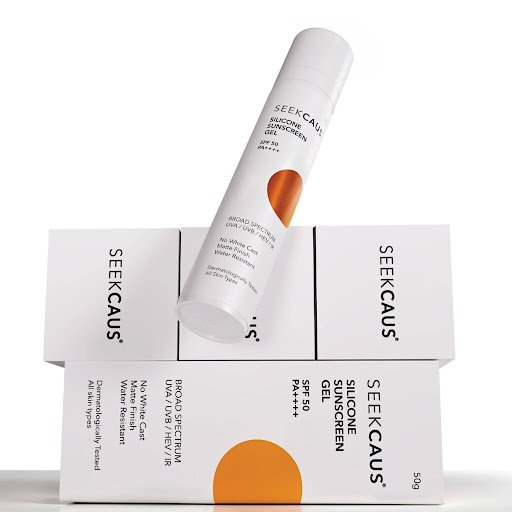
For anyone looking for a non-greasy sunscreen for oily and acne prone skin, the SeekCaus Silicone Gel Sunscreen is a good option. It’s lightweight, matte finish sunscreen.
Offers SPF 50 PA++++ protection and is a silicone gel.
What makes it worth considering?
Lightweight silicone gel texture: for a comfortable application.
Matte finish: helps to reduce the appearance of surface shine.
Non-comedogenic formula: developed with acne prone skin in mind.
No white cast: when applied as directed, it leaves absolutely no white cast.
Barrier friendly approach: Designed with skin comfort and protection in mind.
It may be a good choice for those with oily, acne-prone, or combination skin who prefer lightweight sunscreen textures as opposed to the heavier ones.
The best sunscreen is invariably the one that’s right for your skin, gives you the protection you need and you can actually get on with consistently.
Even the right sunscreen has to be applied the right way. Just follow these easy steps:
Step 1: Begin with Clean Skin
Wash your face with a gentle cleanser appropriate to your skin type. Follow this up with a light moisturiser if your skin is at all prone to dryness. A simple hydrating skincare routine can help prepare your skin for sunscreen application.
Step 2: Use an Adequate Amount
Apply sunscreen liberally and evenly over your face, neck, and any other areas that are exposed. Using too little will reduce the level of protection you achieve.
Step 3: Apply Before You Go in the Sun
Apply sunscreen about 15 minutes prior to going outside in accordance with the product instructions.
Step 4: Reapply on a Regular Basis
Reapply roughly every two hours when you’re out and about, and after swimming/sweating/drying off with a towel. Always follow the water resistance instructions on the product label.
Step 5: Stay Consistent with Your Routine
Sunscreen should be the very last step in your morning skincare routine, after all your other products. Make it a daily thing rather than something you just do when the sun is really shining. Whether you choose a hyperpigmentation sunscreen or a formula for oily skin, consistency matters.
Everyday Sunscreen Mistakes to Avoid When Your Skin Is Acne-Prone
Skip the sunscreen because you’ve got oily skin? Even oily skin needs daily sun protection.
Apply too little product: a thin layer may fail to provide the protection claimed on the label.
Choose a formula purely on the basis of SPF? Texture, broad-spectrum protection, and whether the formula is actually one that you’ll use are all important.
Failing to reapply: one application in the morning won’t be sufficient protection for the full day you’ll be spending outdoors.
Assuming non-comedogenic means it won’t cause breakouts (every individual’s skin is going to react differently, so you’ll need to watch how your skin responds to a new product).
Final Thoughts: Make Sun Protection Comfortable
Having acne-prone or oily skin doesn’t mean you must compromise on sun protection. A good sunscreen should offer dependable UV protection while feeling comfortable on your skin.
Seek out a non-comedogenic formula, a lightweight texture, and broad-spectrum SPF protection. If a matte finish is what you prefer, a silicone gel sunscreen could be a fitting addition to your routine.
With SeekCaus Silicone Gel Sunscreen, everyday sun protection can become a more comfortable
FAQ’s
1. What sunscreen is best for acne prone skin?
A good place to start is a broad spectrum sunscreen (SPF 30 or above) that’s lightweight and non-comedogenic. Gel and silicone based textures can be very comfortable for oily and acne prone skin.
2. Do non-greasy sunscreens block pores?
A non-greasy texture in no way guarantees that a product won’t clog your pores. You need to look for a non-comedogenic formula and of course pay attention to how your own skin responds.
3. Is it OK to use sunscreen if I’ve got active acne?
Yes, skin that’s prone to acne still needs sun protection. Choose a gentle sunscreen and avoid rubbing it in over active breakouts.
4. Is gel sunscreen a better option for oily skin?
Gel sunscreens generally have a very light texture which many people with oily skin will find quite comfortable. That said the right one is going to be down to the full formula and your own individual skin type.
5. If I’ve got oily skin should I put on moisturiser before the sunscreen?
If your skin is dry in any way then you should apply a light moisturiser before your sunscreen. If your sunscreen is going to hydrate your skin sufficiently then you won’t actually need an extra moisturiser. You can adjust your hydrating skincare routine depending on how your skin feels.