You finally notice those brown patches on your cheeks starting to fade. Then a weekend outdoors, a few hours near a sunny window, or even a long commute brings them right back. Sound familiar?
If so, you are not alone, and it does not mean your treatment has failed. More often, your skin is simply not getting the right daily shield. The truth is that sunscreen for melasma is not an optional extra. It is the foundation every other step in your routine depends on.
What Makes Melasma-Prone Skin So Sensitive?
Melasma shows up as brown or grey-brown patches, most often on the cheeks, forehead, upper lip, and nose. Hormones, genetics, heat, and inflammation can all play a part, but sun exposure remains the biggest trigger.
In melasma-prone skin, the pigment-producing cells called melanocytes are easily provoked. A small amount of light is enough to push them into making extra melanin, which is why patches can darken so quickly. The condition is especially common in women and in people with medium to deeper skin tones, including many across India, where UV levels stay high for most of the year.
Why Sun Protection Is the Most Important Step
Think of melasma treatment as filling a bucket that has a hole in it. Brightening creams and clinic procedures add water, while unprotected sun exposure keeps draining it. Without daily protection, even the best treatment can only do so much.
Here is what the right sunscreen does for you:
- It reduces the chance of new patches forming
- It stops existing patches from getting darker
- It helps your treatments deliver better results
- It lowers the risk of pigmentation returning once you see improvement
The same applies to general discolouration. A dependable sunscreen for pigmentation works quietly in the background, keeping your skin tone even while your other products do their job.
Not All Sunscreens Are Equal
Many people apply a regular SPF 30 and assume they are covered. For melasma, that often falls short. Standard formulas mainly block UVB, the rays behind sunburn. UVA rays go deeper into the skin and are strongly linked to pigmentation. On top of that, visible and blue light, which come from the sun and also from screens, can trigger darkening in deeper skin tones.
When you shop for a sunscreen for hyperpigmentation, look for these features:
- Broad spectrum protection against both UVA and UVB
- A high PA rating, such as PA++++, for strong UVA defence
- Protection against blue light
- Photostable filters that do not break down quickly in sunlight
- Ingredients that support an even skin tone
A good sunscreen for melasma should also feel light on the skin. If a formula is heavy or sticky, you will not wear it every day, and heat and sweat can make patches worse.
Meet Seekcaus Lumiveil: Protection Plus Pigmentation Care
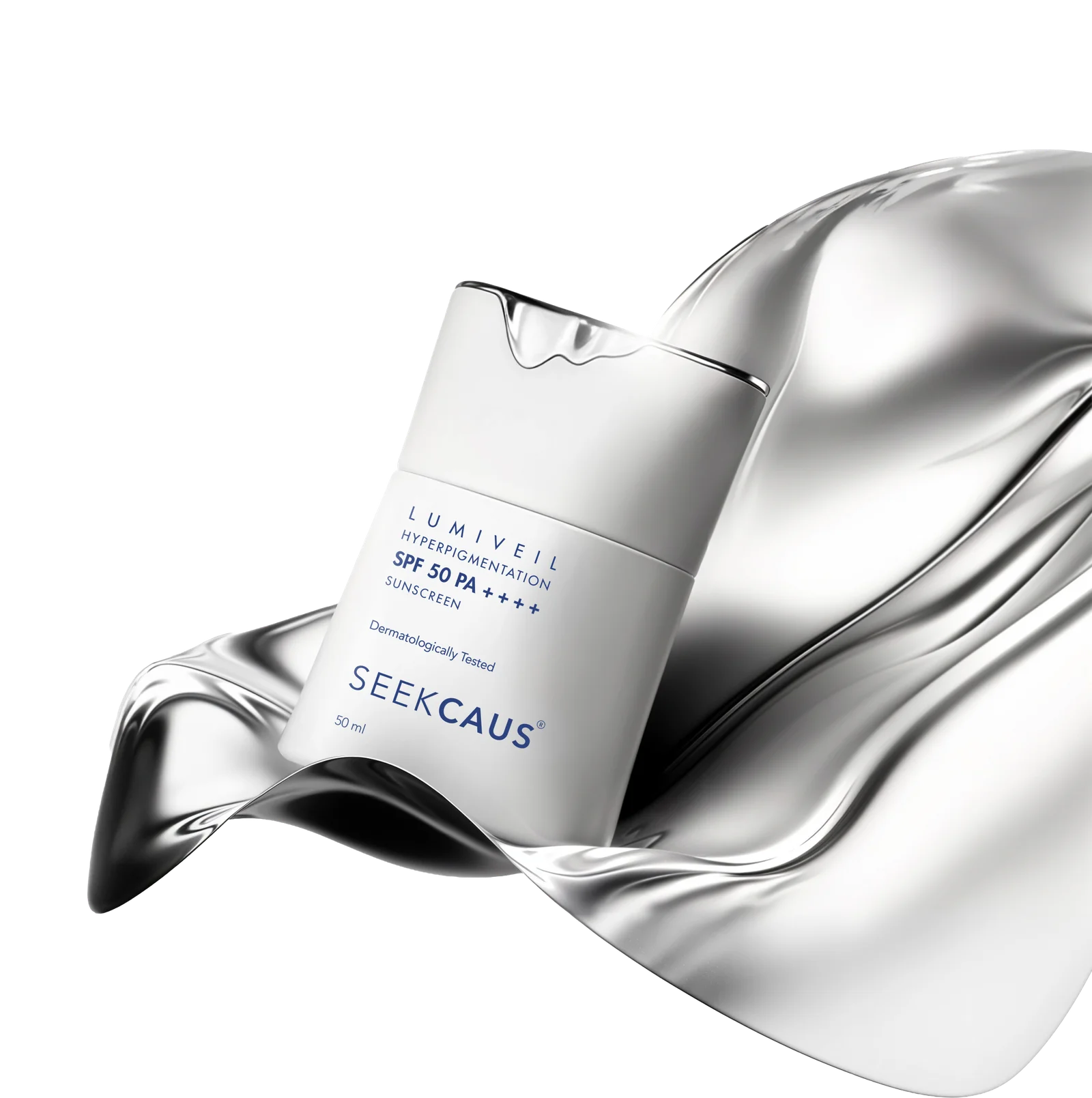
If you want sun protection and pigmentation support in a single step, Seekcaus Lumiveil from Dermis Oracle deserves a closer look. It is a daytime sunscreen for pigmentation care that combines high-performance UV defence with depigmenting actives.
Here is what goes into it:
- DHHB + Ethylhexyl Triazone: photostable broad-spectrum UV protection
- Bemotrizinol + Ecamsule: UVA and UVB defence with enhanced long UVA coverage
- Alpha Arbutin: supports pigmentation management by regulating tyrosinase, the enzyme involved in melanin production
- Lipocell PTB: helps reduce oxidative stress linked to melanocyte activity
- HeV Melanin: helps protect against blue light induced pigmentation
- Glycerin and Propanediol: support hydration so skin feels comfortable through the day
In in-vitro testing using standard ISO methodology, Lumiveil recorded an SPF of 65.99, a critical wavelength of 378.2, and a PA++++ rating, and it is broad-spectrum. A separate clinical data also showed reduced tyrosinase activity by 41.96% and melanin synthesis by 35.70%. That makes it a practical sunscreen for hyperpigmentation and a thoughtful sunscreen for melasma for anyone who wants one product to protect and brighten.
How to Use Sunscreen the Right Way
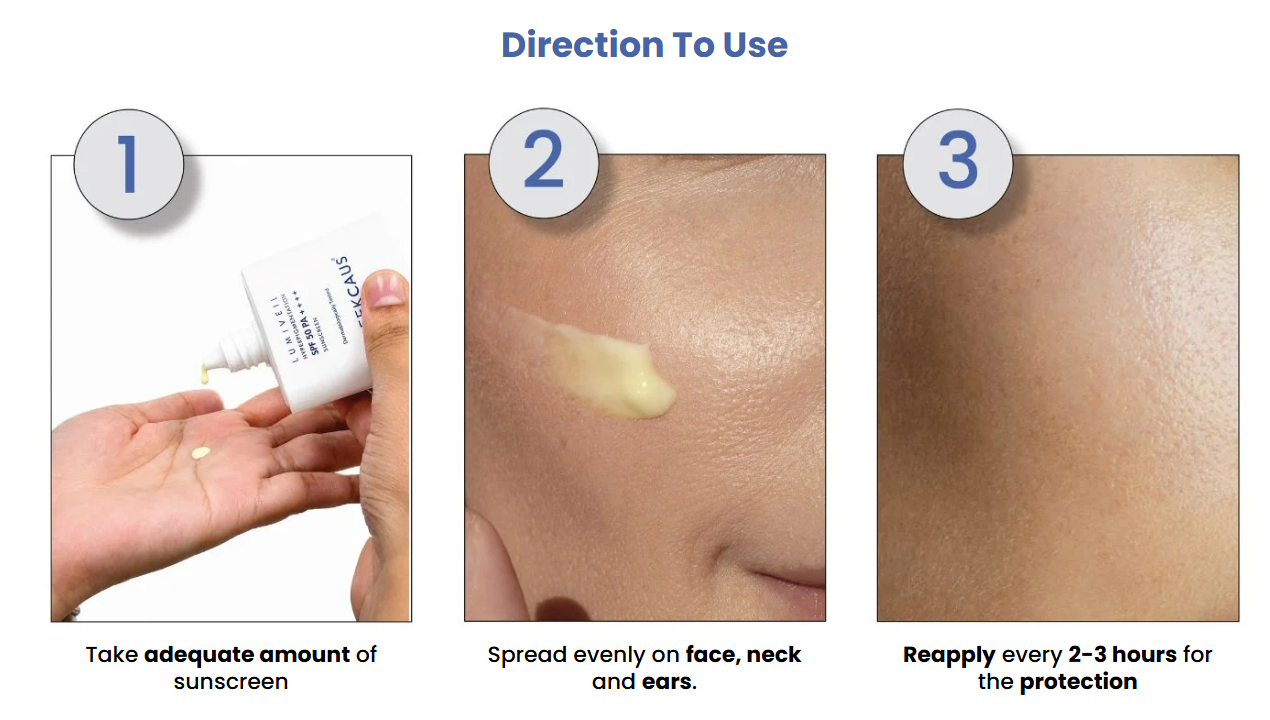
Even the best formula will not help if it is applied poorly. Keep these simple steps in mind:
- Take an adequate amount of sunscreen. Using too little is the most common mistake.
- Spread it evenly over your face, neck, and ears.
- Reapply every two to three hours, especially if you are outdoors or sweating.
- Wear it every day, including cloudy days and when you sit near bright windows.
Consistency matters more than anything else. A reliable sunscreen for pigmentation only protects you on the days you actually wear it.
Common Mistakes That Undo Your Progress
Plenty of people do most things right and still struggle to see results. Watch out for these habits:
- Wearing sunscreen only on holidays or beach days
- Skipping reapplication after lunch or a commute
- Forgetting the neck, ears, and hairline
- Relying on the SPF in makeup alone
- Choosing a sunscreen for hyperpigmentation that has no UVA or blue light protection
- Spending long hours in peak sun with no hat or shade
Sunscreen works best alongside sensible habits. No product can replace a hat, an umbrella, or a little shade during the hottest hours.
Ready to Take Control of Your Skin Tone?
Melasma does not have to run your life. With steady habits and the right formula, you can slow down new pigmentation, support your treatment, and feel more confident in your own skin. Whether you are searching for sunscreen for melasma or a sunscreen for hyperpigmentation that fits your routine, the key is to start today and stay consistent.
Explore Seekcaus Lumiveil at dermisoracle.com/lumiveil or reach the Dermis Oracle team at hello@dermisoracle.com or +91 98678 27352 to find the right routine for your skin. If your melasma is stubborn or worsening, please consult a dermatologist for a proper diagnosis.
About Dermis Oracle
Dermis Oracle is a dermatology-focused skincare company based in Mumbai that builds science-led solutions for skin, hair, and scalp concerns. Through its brands, including Seekcaus and Anable, the team works with dermatologists to deliver evidence-based products that balance health and beauty. From pigmentation care to everyday sun protection, Dermis Oracle is committed to helping you build a routine that works for your skin.
Visit: https://dermisoracle.com/lumiveil/ | Email: hello@dermisoracle.com | Call: +91 98678 27352
Address: Hari Om Plaza, Mahatma Gandhi Road, Borivali, Mumbai 400066
Frequently Asked Questions
1. Can sunscreen for melasma cure the condition?
No. Melasma is a long-term condition that needs a complete plan. However, daily sunscreen for melasma prevents patches from darkening and helps your treatment work better.
2. What is the best sunscreen for hyperpigmentation?
Choose a broad-spectrum formula with a high PA rating, blue light protection, and a texture you are happy to wear daily. Added actives such as alpha arbutin can offer extra support for uneven tone.
3. Do I need sunscreen for pigmentation if I stay indoors?
Yes. UVA rays and visible light can pass through windows, so wearing sunscreen for pigmentation at home or in the office is still a smart habit, especially near natural light.
4. Is Lumiveil suitable for melasma-prone skin?
Lumiveil is formulated as a daytime treatment sunscreen for pigmentation concerns, including melasma. Use it as directed, and do a patch test first if you have very sensitive skin. A dermatologist can advise on the best plan for you.
5. Can I use sunscreen for pigmentation under makeup?
Yes. Apply it as the last step of your skincare routine and let it settle for a few minutes before applying makeup. Remember to reapply every two to three hours.
6. How long before I see results?
Pigmentation changes gradually. Most people need several weeks of consistent use, along with sun avoidance, before they notice a difference. Results vary from person to person.