Let me be honest with you, I used to think sunscreen was only something I needed at the beach. Then I started working late nights, phone screen inches from my face, and noticed my skin slowly changing in ways that didn’t add up. Dullness. Uneven tone. Fine lines where there weren’t any before. My sun exposure hadn’t changed. My diet hadn’t changed. What had changed was my screen time.
That’s when I went deep into research and found a term I hadn’t considered seriously before: blue light damage. And the more I read, the more I realised this is a conversation the skincare world hasn’t been loud enough about, especially for Indian skin.
So in this blog, I want to break it all down for you the signs, the science (promise I’ll keep it simple), and what actually helped me turn things around, including finding the right post treatment sunscreen that works with your whole light environment, not just the sun.
What Exactly Is Blue Light — and Why Should You Care?
Blue light is part of the visible light spectrum, sitting between UV and green light at wavelengths of roughly 400 to 500 nm. Unlike UV rays, which your sunscreen is specifically designed to block, blue light passes right through most conventional sunscreens and reaches deep into your skin layers.
You’re exposed to it from two main sources:
- Natural sunlight: the largest source, which is why outdoor exposure matters year-round
- Digital screens: phones, laptops, tablets, and LED lighting, which have become a near-constant presence in modern life
The tricky part is this: blue light from screens is much lower intensity than sunlight, but the cumulative exposure from sitting 30–60 cm from a screen for 8–12 hours a day adds up. Researchers have found that six hours of blue light exposure from a screen can cause oxidative stress comparable to 20 minutes of noon sunlight. That’s not a small number.
Why Indian skin is more vulnerable: Melanin-rich skin (Fitzpatrick III–V) is actually more reactive to visible light stimulation than lighter skin tones. This means blue light damage tends to show up faster and more visibly on Indian skin, especially as hyperpigmentation and uneven tone.
7 Signs Your Skin Is Already Showing Blue Light Damage
These signs don’t happen overnight they creep up slowly, which is exactly why most people don’t connect them to their screen time. Here’s what to watch for:
- Hyperpigmentation That Doesn’t Respond to Your Usual Routine
If you’ve been diligently using Vitamin C, niacinamide, or brightening serums but your dark patches just won’t budge, blue light damage could be the reason they keep coming back. Blue light triggers melanin production through a pathway called the TRPA1 channel, independent of UV [5]. So even with UV-blocking sunscreen on, your pigmentation can still worsen from screen exposure if you’re not protecting against visible light too.
- Dullness That Feels Different from Dryness
There’s a specific kind of dull that comes from blue light damage it’s not tight or flaky, it just looks tired and flat. This happens because blue light generates reactive oxygen species (free radicals) that break down the skin’s antioxidant reserves, leaving it looking grey and lifeless. If your skin looks exhausted even when you’re well-rested, this is worth considering.
- Fine Lines Appearing Around Your Eyes and Forehead
Blue light penetrates all the way into the dermis, the deep skin layer where collagen and elastin live. When free radicals accumulate there, they break down these structural proteins faster than your skin can repair them. I started noticing faint lines at 25 that I couldn’t attribute to sun exposure. This was the piece I was missing.
- Redness or Inflammation That Comes and Goes
Some people with sensitive skin notice flare-ups or low-level redness that appears after long screen sessions. Blue light activates inflammatory pathways in the skin, particularly through a protein called opsin [5]. For those with rosacea-prone or reactive skin, this can be a consistent trigger.
- Uneven Skin Texture
If your skin feels rough or bumpy in areas that aren’t prone to breakouts, oxidative stress from blue light damage may be disrupting your skin’s natural cell turnover. When the skin’s renewal cycle is interrupted, dead skin cells accumulate unevenly, creating a texture that doesn’t respond well to exfoliation alone.
- Dark Circles That Worsen Even with Good Sleep
The skin around your eyes is the thinnest on your body and the first to show signs of oxidative damage. If your dark circles seem to deepen despite solid sleep, and you spend significant time on screens, the pigmentation may be partly driven by blue light, not just fatigue.
- Post-Treatment Results That Don’t Last
This one is particularly relevant if you’ve had professional treatments like peels, laser, or microneedling. Blue light damage can re-trigger the very pigmentation you’ve just treated, sometimes within weeks. Without a proper post treatment sunscreen that addresses visible light, your results will keep reversing. This is something I’ve seen come up repeatedly in dermatologist conversations.
What’s Actually Happening Inside Your Skin
I spent a lot of time trying to understand this, not in a PhD way, but enough to actually make sense of what was happening to my face. Here’s what the research shows when blue light hits your skin:
- Free radical cascade: Blue light generates reactive oxygen species (ROS) that attack cell membranes, DNA, and proteins [7]. Your skin has antioxidants to neutralise these, but sustained exposure depletes them faster than they can regenerate.
- Melanin stimulation via visible light: Blue light activates opsin-3 in melanocytes, triggering pigment production through a UV-independent pathway. This is why your hyperpigmentation can worsen even when you’re wearing SPF 50.
- Collagen degradation: Free radicals generated by blue light damage activate enzymes called matrix metalloproteinases (MMPs) that break down collagen and elastin [4]. This accelerates visible ageing, particularly fine lines and loss of firmness [9].
The cumulative effect of all three is what I’d describe as ‘slow-burn ageing,’ gradual, consistent, and largely invisible until the damage has compounded over months or years.
How to Reverse Blue Light Damage: A Practical Approach
The good news is that your skin has remarkable regenerative capacity if you give it the right environment. Here’s what I’ve found actually works, both from research and from experience:
Step 1: Antioxidants in the Morning
This is non-negotiable. Vitamin C (L-ascorbic acid) is the most well-researched antioxidant for neutralising free radicals from both UV and visible light [11]. Apply a stable Vitamin C serum every morning before any sun or screen exposure. Niacinamide doubles up as both an antioxidant and a melanin suppressant, making it particularly relevant for the hyperpigmentation side of blue light damage.
Step 2: Upgrade Your Sunscreen to Cover Visible Light
This is the step most people miss and it’s the most important one. A standard SPF 50 blocks UV but does virtually nothing against blue light. For meaningful protection against blue light damage, you need a post treatment sunscreen built on next-generation organic filters that go beyond standard UV blocking. Advanced photostable filter systems are designed to address the full spectrum of light stressors your skin faces daily 2014 indoors and outdoors. This isn’t just cosmetic it’s functional photoprotection for the digital age.
Step 3: Targeted Pigmentation Treatment at Night
While antioxidants fight the cause during the day, nighttime is when you address the consequence. Alpha Arbutin and tranexamic acid are two of the most effective ingredients for visible-light-driven hyperpigmentation because they work on the melanin production pathway rather than just trying to fade existing pigment. Retinoids also support cell turnover, helping clear the dull, uneven texture that comes with cumulative blue light damage.
Step 4: Reduce Direct Screen Exposure
Okay, I know this one isn’t glamorous. But hear me out. Increasing the distance between your face and your phone by even 30 cm reduces blue light intensity significantly (intensity drops with the square of distance). Night mode and blue-light filtering screen settings reduce emission by 20–40%, which is meaningful for prolonged sessions.
Step 5: Barrier Support
A compromised skin barrier amplifies the effects of blue light damage allowing deeper penetration and reducing your skin’s ability to neutralise free radicals. Ceramide-based moisturisers and gentle, fragrance-free formulations help maintain barrier integrity, particularly if you’re also using active ingredients like Vitamin C or retinoids.
What I Use: Seekcaus Silicone Sunscreen Gel
Disclosure: Seekcaus is a Dermis Oracle brand. The following is a product recommendation from the publisher.
After going through all of this research, I became very deliberate about what post treatment sunscreen I use. Most sunscreens I tried either left a white cast, felt heavy in Mumbai’s humidity, or simply weren’t formulated to deal with the kind of blue light damage I was experiencing from daily screen exposure.
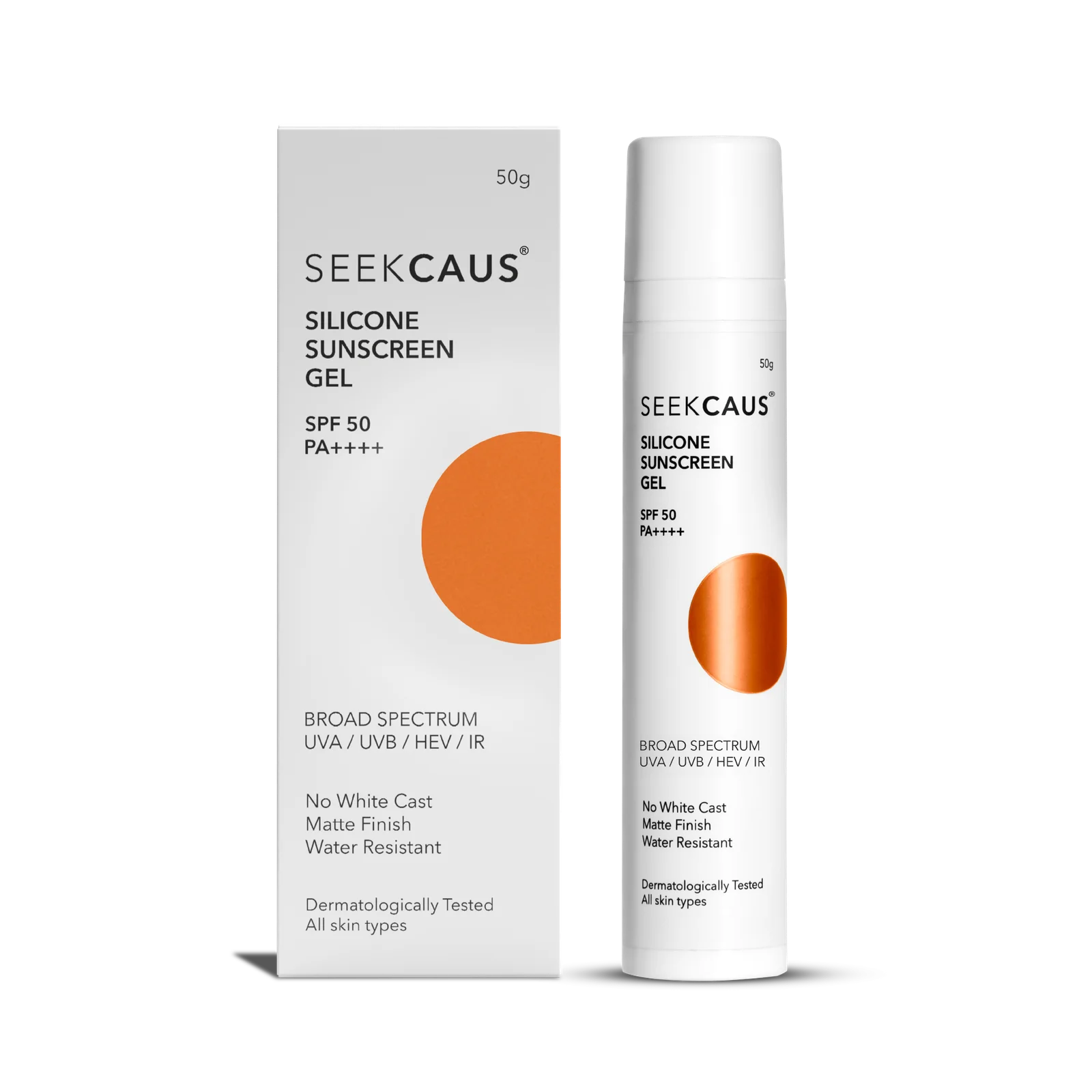
Seekcaus Silicone Sunscreen Gel changed that for me. It’s a lightweight, non-greasy gel built around four actives: Suncat de (Taiwan) a photostable, nano-encapsulated UV filter system for superior UVA and UVB coverage; Chem 1789 (India) a powerful UVA filter that prevents photoageing and deep cellular damage; AC-VCE (China) a stable Vitamin C derivative that fights free radical damage, prevents pigmentation, and brightens skin; and Renouvellance (Spain) a unique hydrating complex that locks in moisture and strengthens the skin barrier. The clinical validation backs it up: in-vitro SPF 54.72, critical wavelength 376.5 nm, 5-star Boots rating, PA++++, broad-spectrum pass. All of this in a gel texture that absorbs in seconds and leaves zero residue.
What makes it specifically relevant for blue light damage is the combination of AC-VCE (Ethyl Ascorbic Acid) a stabilised Vitamin C that neutralises the free radicals triggered by screen exposure, alongside Porphyridium Cruentum Extract, a marine antioxidant that stimulates collagen synthesis and protects against environmental stressors. Together, they address both the cause and consequence of blue light damage: oxidative stress and accelerated ageing. The formula is also free from parabens, fragrance, phthalates, mineral oil, and PEG, making it appropriate for sensitive and post-procedure skin where recovery is already underway.
For anyone coming out of a peel, laser, or microneedling session, this is the post treatment sunscreen I’d genuinely recommend. It’s dermatologically evaluated, non-irritant, non-comedogenic, suitable for all skin types, including oily and sensitive, and protective enough to actually guard the results you’ve invested in.
Explore Seekcaus Silicone Sunscreen Gel at https://dermisoracle.com/seekcaus-silicone-sunscreen-gel/
FAQ’s
Can blue light from my phone really damage my skin?
Yes — though the intensity is much lower than sunlight, cumulative daily screen exposure adds up significantly. Research shows that the oxidative stress from prolonged screen use is comparable to short bursts of sun exposure. The key difference is that it’s happening indoors, year-round, at close range, without most people taking any protective measures.
Does my regular SPF 50 sunscreen protect against blue light damage?
Not effectively. Standard sunscreens are formulated to block UV radiation (UVA and UVB). Blue light sits in the visible spectrum and passes straight through most conventional UV filters. For blue light protection, you need a post treatment sunscreen built on advanced next-generation organic filters that provide broad-spectrum coverage beyond standard UV protection.
How long does it take to see improvement once I start protecting against blue light?
Skin typically shows meaningful improvement in texture and dullness within four to six weeks of consistent antioxidant use and proper photoprotection. Pigmentation takes longer — usually three to six months for visible results with targeted ingredients. The most important thing is consistency rather than speed.
Is blue light damage reversible?
Honestly, more than you might expect. The dullness, texture changes, and early free radical damage respond really well once you give your skin the right tools — consistent antioxidants and proper photoprotection. Established pigmentation takes longer but responds well to melanin-targeting actives (Alpha Arbutin, tranexamic acid, kojic acid) alongside proper sunscreen use. Deep structural damage from long-term collagen breakdown is harder to reverse, which is why early prevention matters more than any corrective treatment.
Does indoor light cause blue light damage too?
LED office lighting and warm white bulbs also emit blue light, though at lower intensities than screens. If you spend most of your day indoors under artificial lighting and in front of screens, the combined exposure is meaningful. Wearing a blue-light-protective sunscreen as your morning base, even on days you don’t go outside, is a sensible habit to build.